Northern Kenya wildlife guide
The Samburu Special Five
Grevy’s zebra, the reticulated giraffe, the Somali ostrich, the gerenuk and the Beisa oryx: five rare animals you’ll only really see in Kenya’s wild north.
The Samburu Special Five are five species adapted to the hot, dry bush of the Horn of Africa. Northern Kenya sits at the southern edge of their range, so Samburu, Buffalo Springs and Shaba national reserves are among the best places on earth to see all five together. Three of them are endangered, which makes every sighting special.
Tap an animal to jump to its fact file.
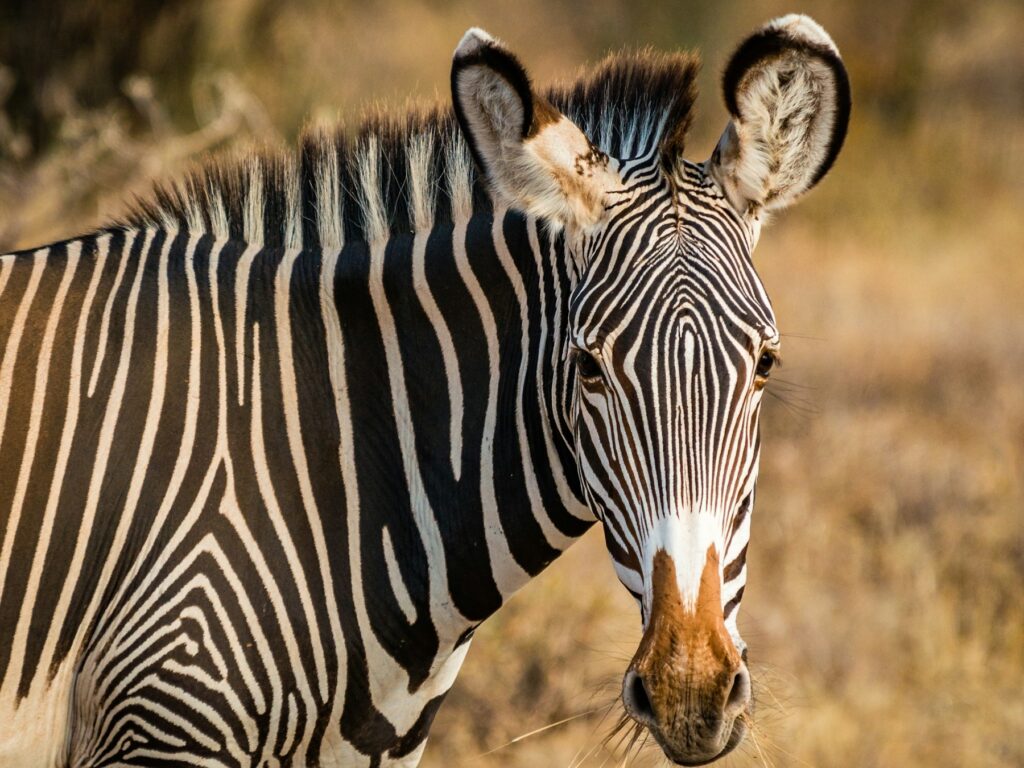
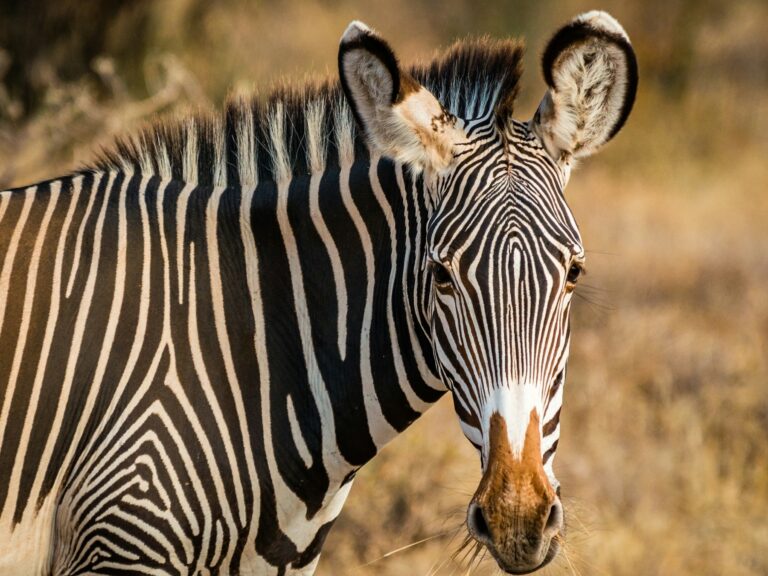
Equus grevyi
Taller and heavier than the familiar plains zebra, Grevy's zebra is the largest wild member of the horse family. Its stripes are narrow and close together, they stop short of a clean white belly, and it has big, rounded ears and a brown muzzle.
Numbers fell from around 15,000 in the 1970s to roughly 3,000 today, and about nine in ten of them live in northern Kenya. Community conservancies around Samburu now play a big part in protecting them.
Few people ever see the world's rarest zebra in the wild. On our Samburu safari you'll be in the heart of its range.
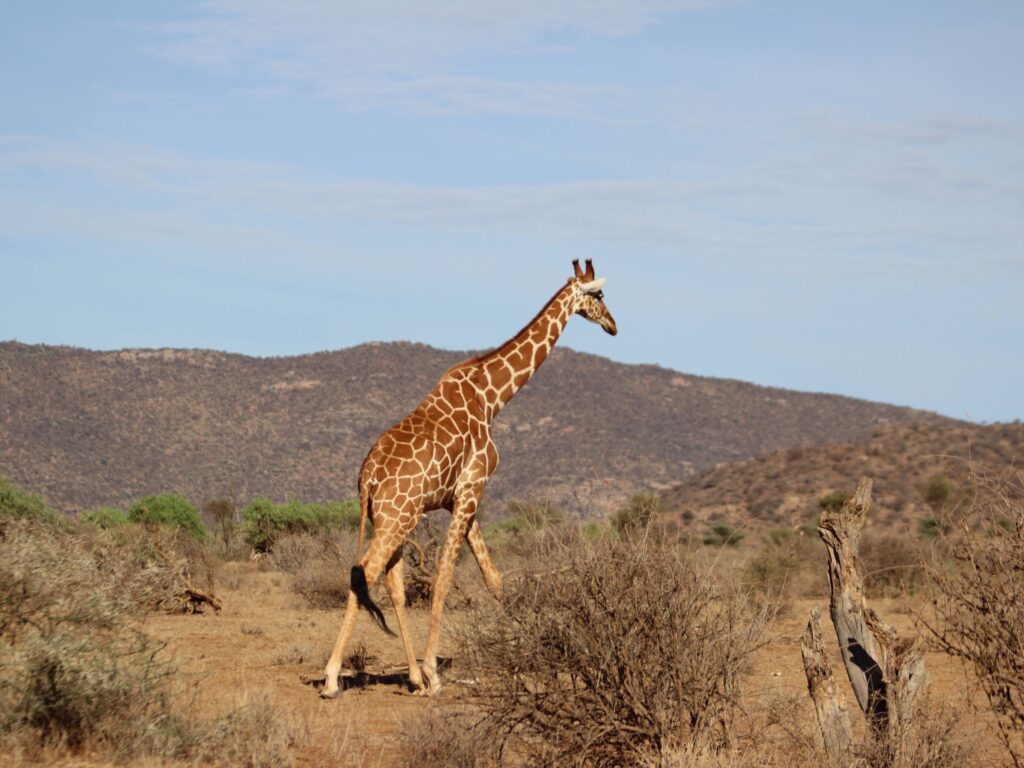
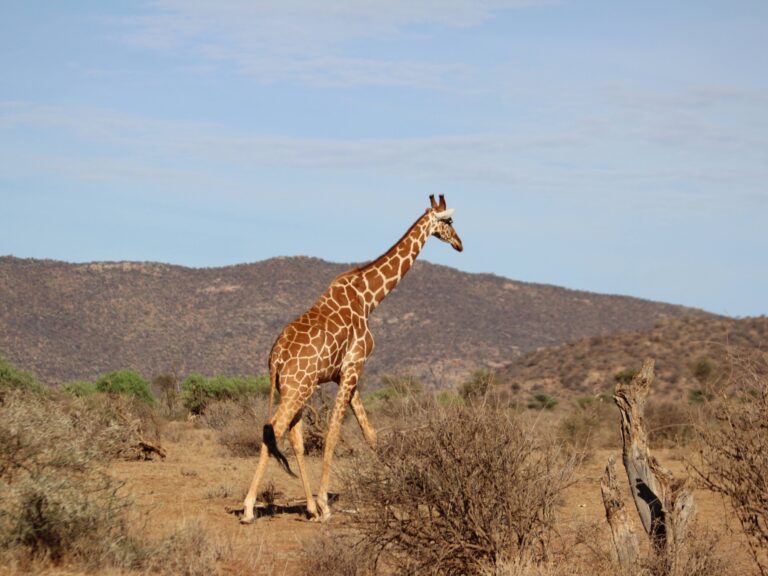
Giraffa reticulata
"Reticulated" means net-like, and one look explains the name: large, liver-red patches divided by bright white lines, as neat as crazy paving. It is now recognised as a giraffe species in its own right.
Around 20,900 live in the wild, almost all of them in northern Kenya. Watching one stretch up into an acacia, or a group drifting across the plain at dusk, is one of the great sights of a Samburu safari.
Always dreamed of seeing a giraffe browsing an acacia at sunset? Samburu is the place to make it happen.
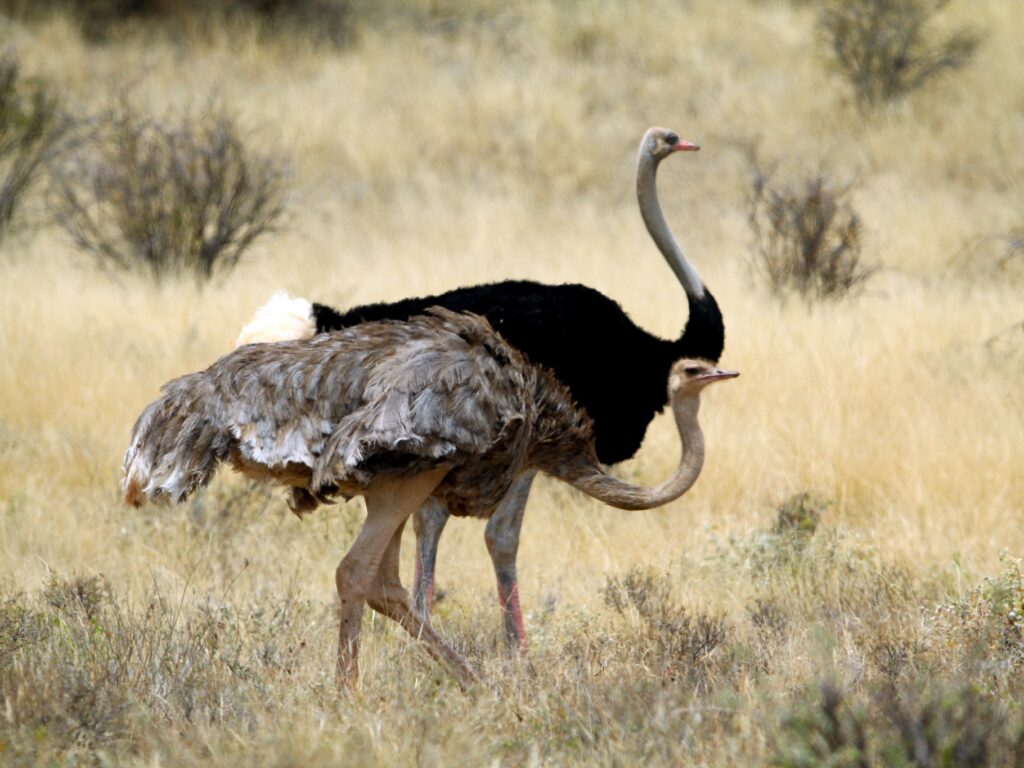
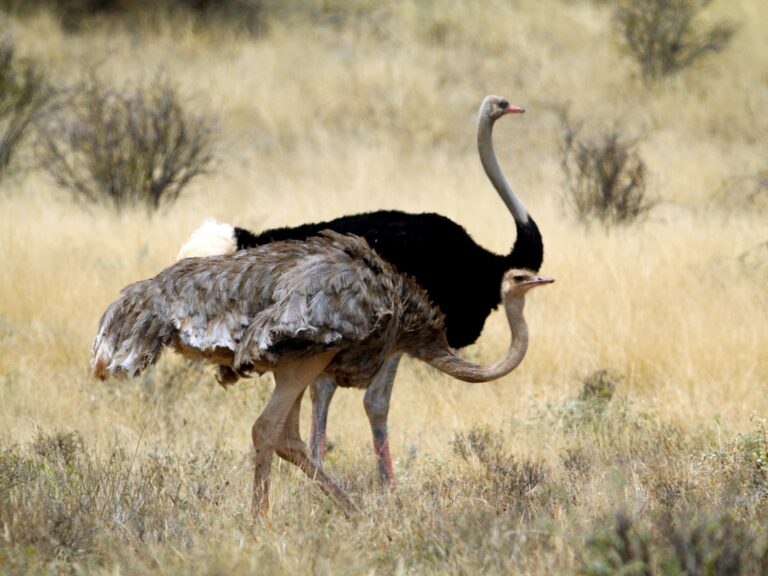
Struthio molybdophanes
Recognised as a separate species from the common ostrich in 2014, the Somali ostrich has blue-grey skin on its neck and thighs rather than pink. In the breeding season the males' necks and legs turn a bright, almost electric blue.
Further south you'll find the common (Maasai) ostrich, so spotting the blue-legged birds is a sure sign you've reached the north. Like all ostriches it can't fly, but it is one of the fastest runners on two legs.
Ticking off the Somali ostrich means you've seen something most safari-goers never do. Let us take you north to find it.
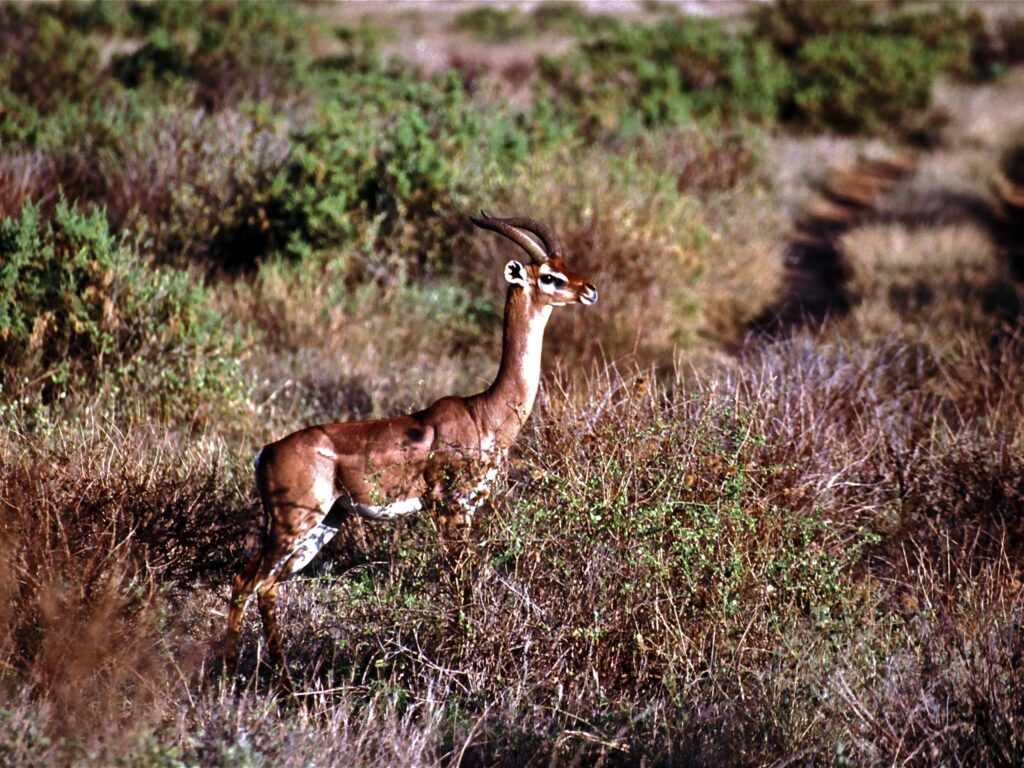
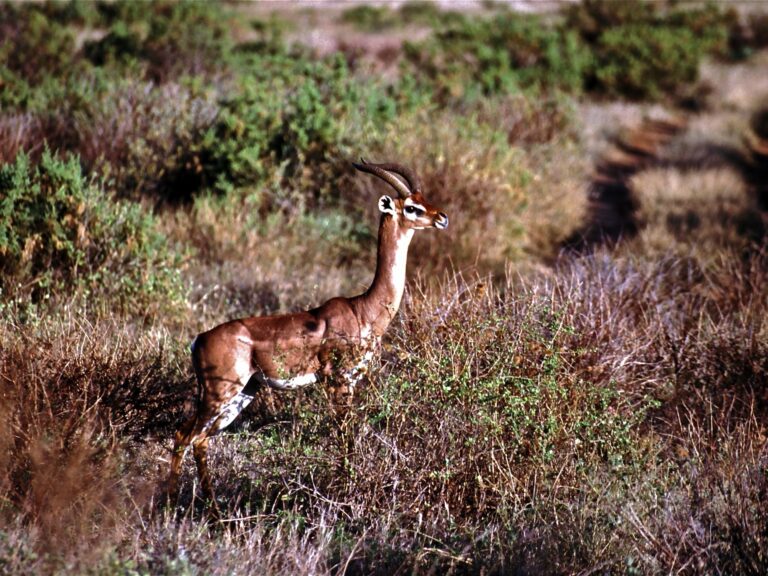
Litocranius walleri
Its name comes from the Somali for "giraffe-necked", and it suits this graceful little antelope perfectly. A gerenuk will stand upright on its hind legs, resting its front hooves on a branch, to reach leaves that other browsers cannot.
It gets most of the moisture it needs from the leaves it eats, so it can go for long periods without drinking, which lets it live in dry bush far from water. Only the males have horns.
Watching a gerenuk feed standing on two legs is pure safari magic. Our guides know the thickets where they browse.
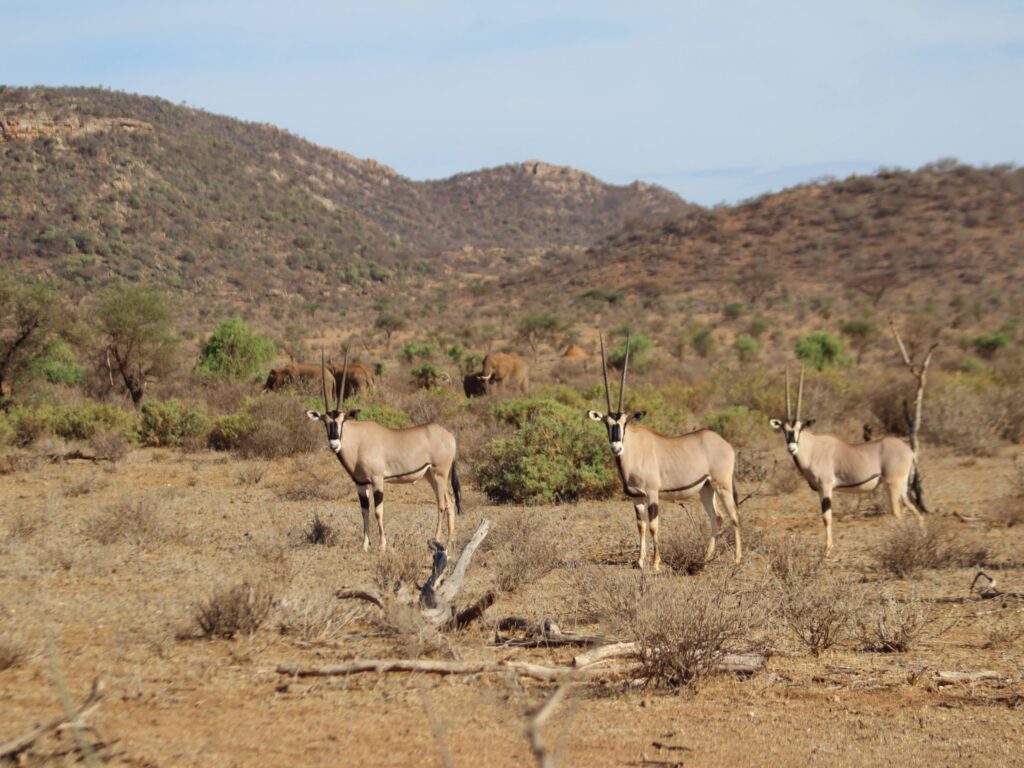
Oryx beisa
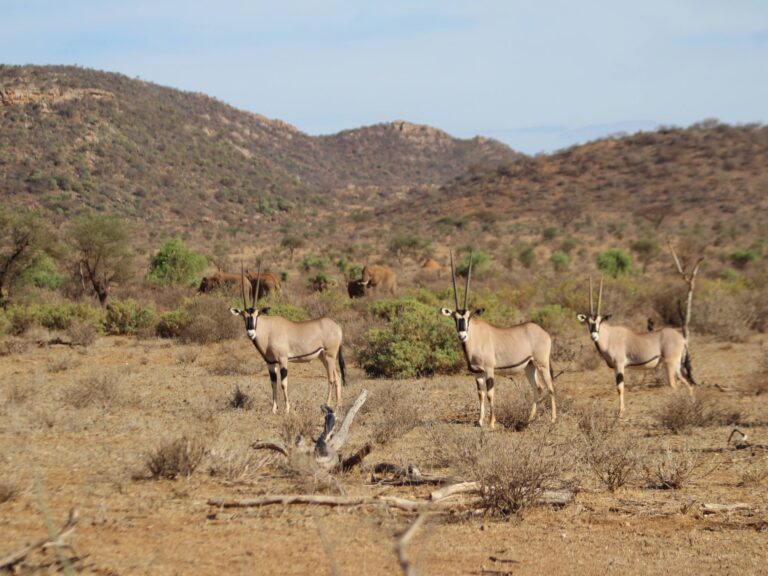
With long, straight, ringed horns on both males and females, bold black-and-white face markings and a dark stripe along its side, the Beisa oryx is one of the most elegant animals in Africa.
It is superbly adapted to heat and drought and can go a long time without drinking. In Kenya it lives north of the Tana River; south of the river its place is taken by the fringe-eared oryx.
Seeing a herd of oryx shimmering in the northern heat is a picture you will keep for life. Start planning your Samburu safari today.
All five evolved in the hot, semi-arid bush of the Horn of Africa, where many can go a long time without drinking and feed on dry-country plants. Northern Kenya, with the Ewaso Ng’iro River running through Samburu and Buffalo Springs, is the southern edge of that world. Head south into the greener Maasai Mara and you’ll meet their cousins instead: plains zebra, Maasai giraffe, the common ostrich and the fringe-eared oryx.
The Big Five (lion, leopard, elephant, buffalo and rhino) are famous across Africa. The Special Five belong to the north. The good news is you don’t have to choose: Samburu is also home to big elephant herds, lions, leopards and buffalo, and the conservancies of Laikipia, close by, protect black and white rhino.
Pair them and you can tick off both lists in a single, easy-paced journey.
| Big Five | Special Five |
|---|---|
| Lion | Grevy’s zebra |
| Leopard | Reticulated giraffe |
| Elephant | Somali ostrich |
| Buffalo | Gerenuk |
| Rhino | Beisa oryx |
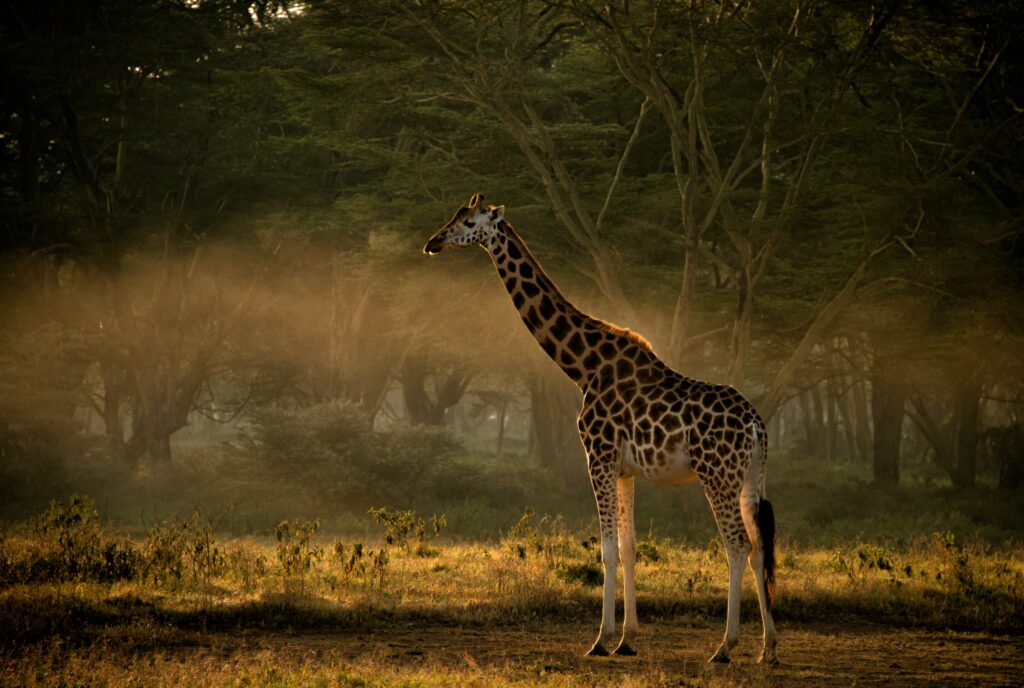
Days of game drives in Samburu with expert local guides, giving you the best chance of seeing all five.
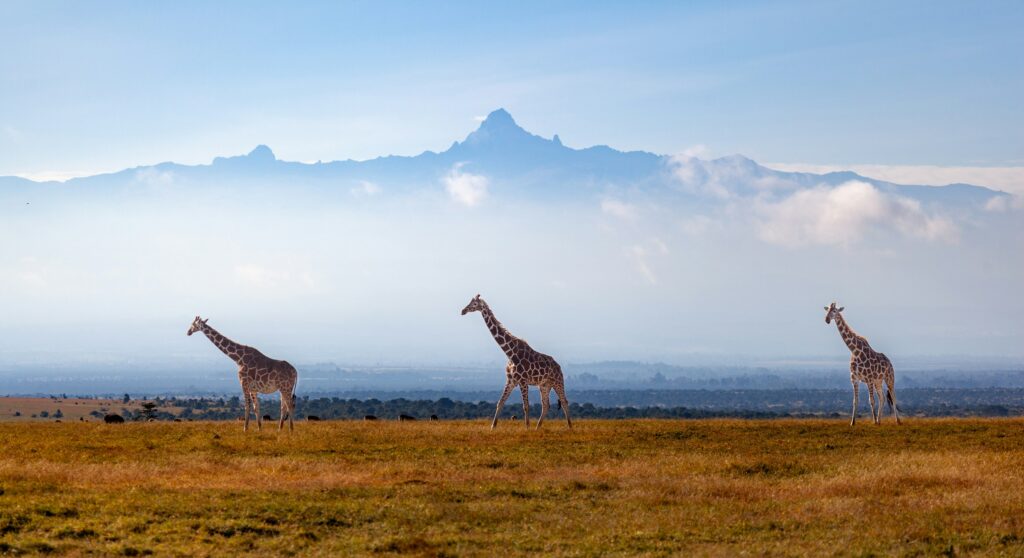
The Special Five in Samburu, time around Nanyuki close to the rhino conservancies of Laikipia, the misty Aberdare highlands and Nairobi.
The Samburu Special Five are five animals found mainly in the dry north of Kenya and rarely seen on safaris further south: Grevy's zebra, the reticulated giraffe, the Somali ostrich, the gerenuk and the Beisa oryx. Samburu National Reserve and its neighbours are among the best places on earth to see all five.
The best places are Samburu, Buffalo Springs and Shaba national reserves, which sit side by side about 6 to 7 hours by road north of Nairobi, or around an hour by light aircraft. Some of the five can also be seen in Laikipia conservancies such as Lewa.
You can see them all year round, but the dry seasons, generally late June to October and January to March, are especially rewarding. Animals gather near the Ewaso Ng'iro River and the bush is thinner, which makes them easier to spot.
Three to four days in Samburu gives you several game drives and a very good chance of seeing all five with an experienced local guide. Our Samburu safari gives you several days in the reserve, with Nairobi and Nanyuki either side.
Three of them are listed as Endangered on the IUCN Red List: Grevy's zebra, the reticulated giraffe and the Beisa oryx. The Somali ostrich is Vulnerable and the gerenuk is Near Threatened, so seeing them in the wild is a real privilege.
The Big Five are the lion, leopard, elephant, buffalo and rhino. The Special Five are the dry-country species of the north. Samburu has elephants, lions, leopards and buffalo as well, so you can see many of both groups on one trip.
Yes. Combine Samburu with the Laikipia conservancies around Nanyuki, which are home to black and white rhino, or add the Maasai Mara. Our Kenyan Odyssey and Samburu safari can both be shaped to include them.
Tell us when you’d like to travel and what you’d love to see. A member of the team will shape a northern Kenya safari around you, with a clear price.
Savannah Surprise Travel
Trip planner · our team replies personally